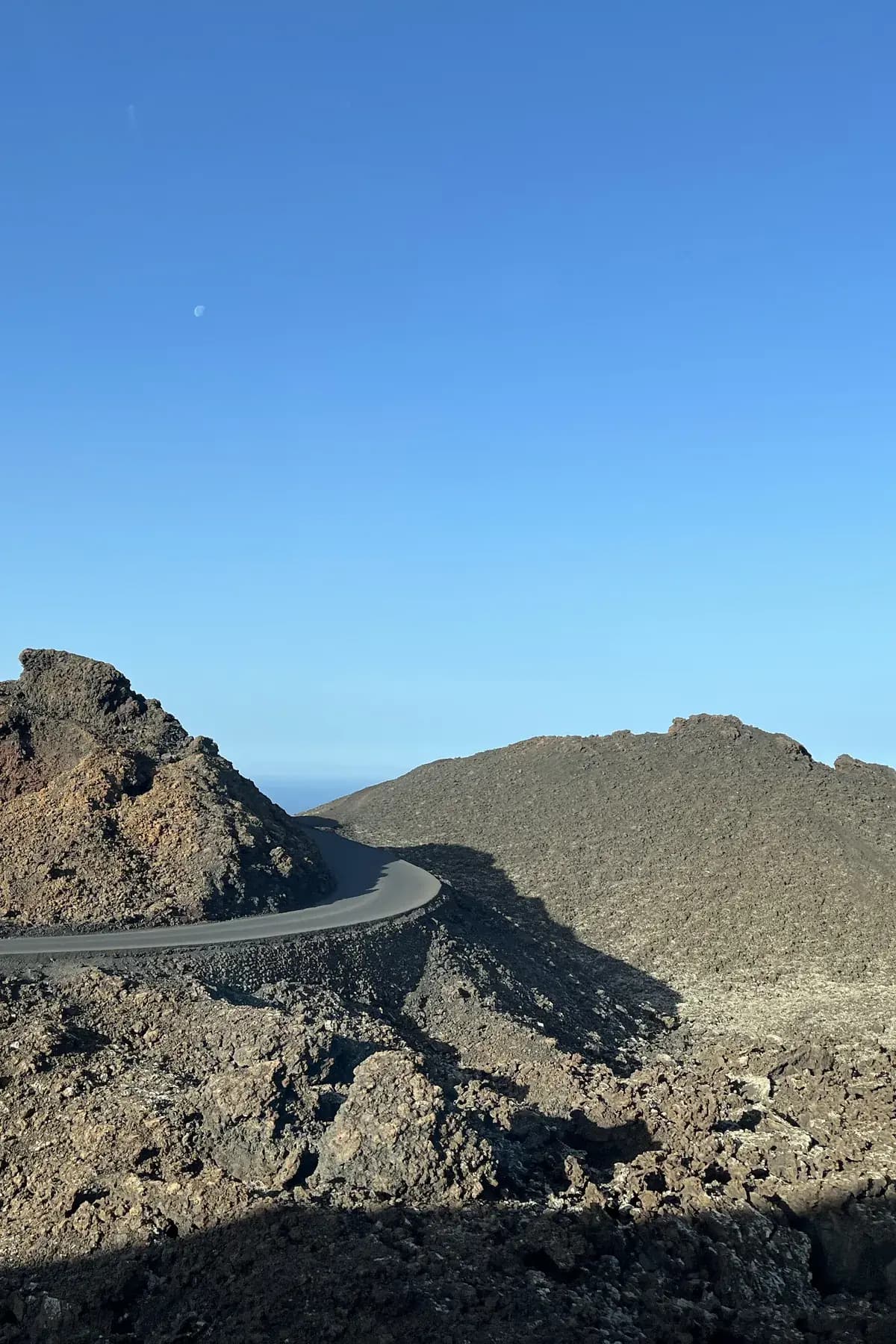
If a group of cyclists with legs of marble is having breakfast at your hotel, don't be surprised: you've been sharing the island with the professional peloton for decades. When winter freezes Europe, teams and champions come down to Lanzarote to get the kilometres in: here you ride in January in short sleeves, on roads with immaculate tarmac, little traffic and landscapes that take (even more of) your breath away. The wind, which never fails to show up here, is the star signing: coaches call it "the invisible mountain". With short but treacherous climbs — Femés, Haría, Tabayesco — and the lap of the island as the queen route, Lanzarote is one of the Atlantic's best-kept cycling destinations. Hiring a good bike costs less than a small indulgence — and the road does the rest.
There's an open secret in European cycling: when November switches off the light and the continent's roads fill with ice, part of the professional peloton packs its bags for the Canaries. Lanzarote has been on that winter circuit since the eighties — Club La Santa was a pioneer in welcoming elite athletes — and one week here in January is enough to understand why: twenty degrees, guaranteed sun, and a network of well-surfaced secondary roads where cars give way and the landscapes do the rest.
The terrain is a curious contract. There are no Alpine passes here — the island is low — yet nobody ever finishes a route calling it flat. The climbs are short and intense: the Femés road and its balcony over Playa Blanca; the wall of Haría with its hairpin bends among palm trees; Tabayesco, the island's best-loved ascent, a valley that climbs gently and venomously up to the Mirador de los Valles; the ramps of Soo or El Golfo. And between one climb and the next, the true judge: the alisio (trade wind). Lanzarote's wind turns a flat road into a mountain pass and an easy spin into a strength session — coaches call it the invisible mountain, and it's the reason so many professionals come here to "hide" hard training. The queen route is the full lap of the island: around 170-200 kilometres depending on the variant, with Timanfaya, El Golfo and the north in a single day — not coincidentally, the Ironman's course.
For the ordinary visitor — the one who doesn't get paid to pedal — the island is just as generous. Half a dozen companies hire out top-of-the-range road, gravel, mountain and electric bikes; there are signposted routes for every level, and gravel riding is booming thanks to the dirt tracks between volcanoes and vineyards. The less competitive get their own prize: an e-bike turns La Geria into the world's finest wine-country ride, with bodegas strategically placed for refuelling.
Three tips from the house. One: start early — the wind tends to wake up mid-morning, and sunrise over the lava fields is a bonus gift. Two: plan for a tailwind on the way home; the locals design their routes "into the alisio on the way out, pushed home on the way back". Three: mutual respect — the island looks after its cyclists (drivers are used to them and leave the metre and a half), so return the favour by riding single file when it's called for.
Who knows? Perhaps the group you're following isn't a bunch of amateurs. Here, the rider who overtakes you on Tabayesco might be preparing for the Tour.