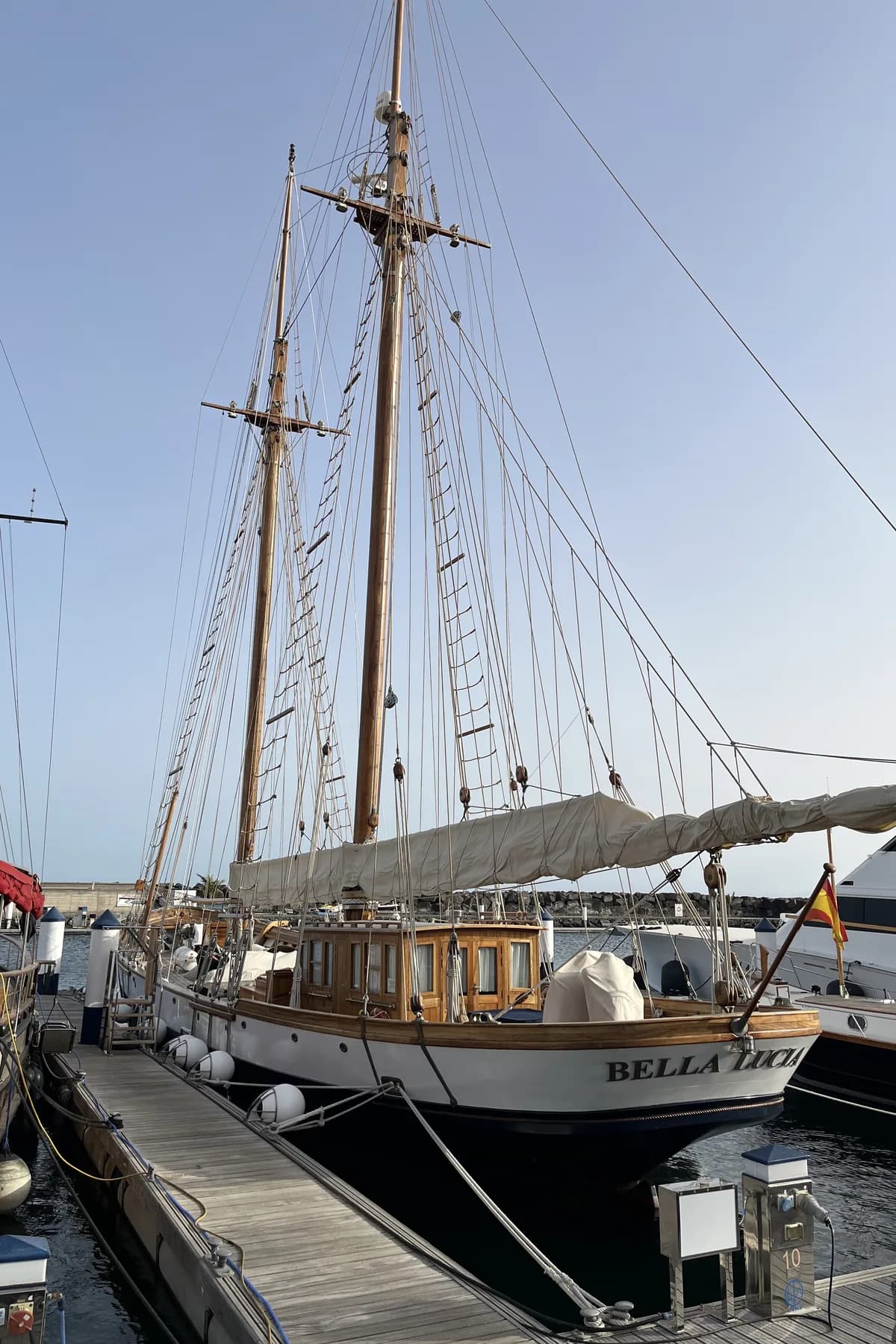
Lanzarote was discovered under sail — literally: legendary Phoenicians, medieval Genoese and Norman conquerors all arrived here that way — and six centuries later it remains a land of sails. Its waters are a perfect classroom: reliable trade winds (alisios), open sea free of treacherous reefs and first-class marinas in Arrecife and Playa Blanca. Every autumn, dozens of yachts under European flags call here before the great leap: crossing the Atlantic. The island's children learn in Optimists in the bay of Arrecife, visitors charter skippered catamarans for the perfect day out — Papagayo, anchor down, tuna on board — and the romantics keep scanning the horizon for the silhouette of an old sailing ship. Here, hoisting a sail is keeping an appointment with history.
There are islands where sailing is a sport; in Lanzarote it is the original language. Everything that reached this island over two thousand years arrived pushed by the wind: the ancient ships that traded with the Majos, the expedition of Lancelotto Malocello, the caravels of the conquest, the brigantines of the salt and cochineal trades. The alisio — that north-east wind as reliable as a clock — was for centuries the motorway in and out. Today engines rule transport, but the culture endures: few European waters offer such noble conditions for sailing all year round.
The current nautical map has three capitals. Marina Lanzarote, in Arrecife, is the urban port: an internationally rated boatyard and pontoons where, every autumn, yachts from half of Europe line up to prepare the adventure of their lives — the Atlantic crossing. The Canaries are the classic last stop before the leap to the Americas, the same logic as the navigators of five centuries ago, and on the docks you breathe that atmosphere of charts, provisioning lists and happy nerves. Marina Rubicón, in Playa Blanca, is the elegant one of the south: its own regattas, a sailing school and the most complete charter fleet. And Puerto Calero completes the trio with its sporting stamp. Around them, the yacht clubs — with the century-old Real Club Náutico de Arrecife as the dean — keep the grassroots alive: on Friday afternoons, the bay of Arrecife fills with tiny white sails, the island's boys and girls learning in Optimists what their great-great-grandparents knew by trade.
And the visitor? The sea is served in every format. The star plan is the sailing excursions to Papagayo: catamarans leaving Puerto del Carmen or Playa Blanca, anchoring in the turquoise coves and returning to port with people who are happier and slightly saltier. Those who can sail may charter a yacht with or without skipper and treat themselves to the dream route: the Timanfaya coast from the sea — the lava fields tumbling into the Atlantic — or the crossing to El Río to sleep at anchor off La Graciosa (with the park permits in order). And those who want to learn properly will find certified schools where you can gain qualifications with the best teacher there is: a constant alisio that never cancels class.
A note for the eye: from any cliff on the east coast, at sunset, you can watch the sails coming home with the wind astern. It is the same image — exactly the same — that the Majos, the pirates and the salt workers saw. Some postcards need no updating.