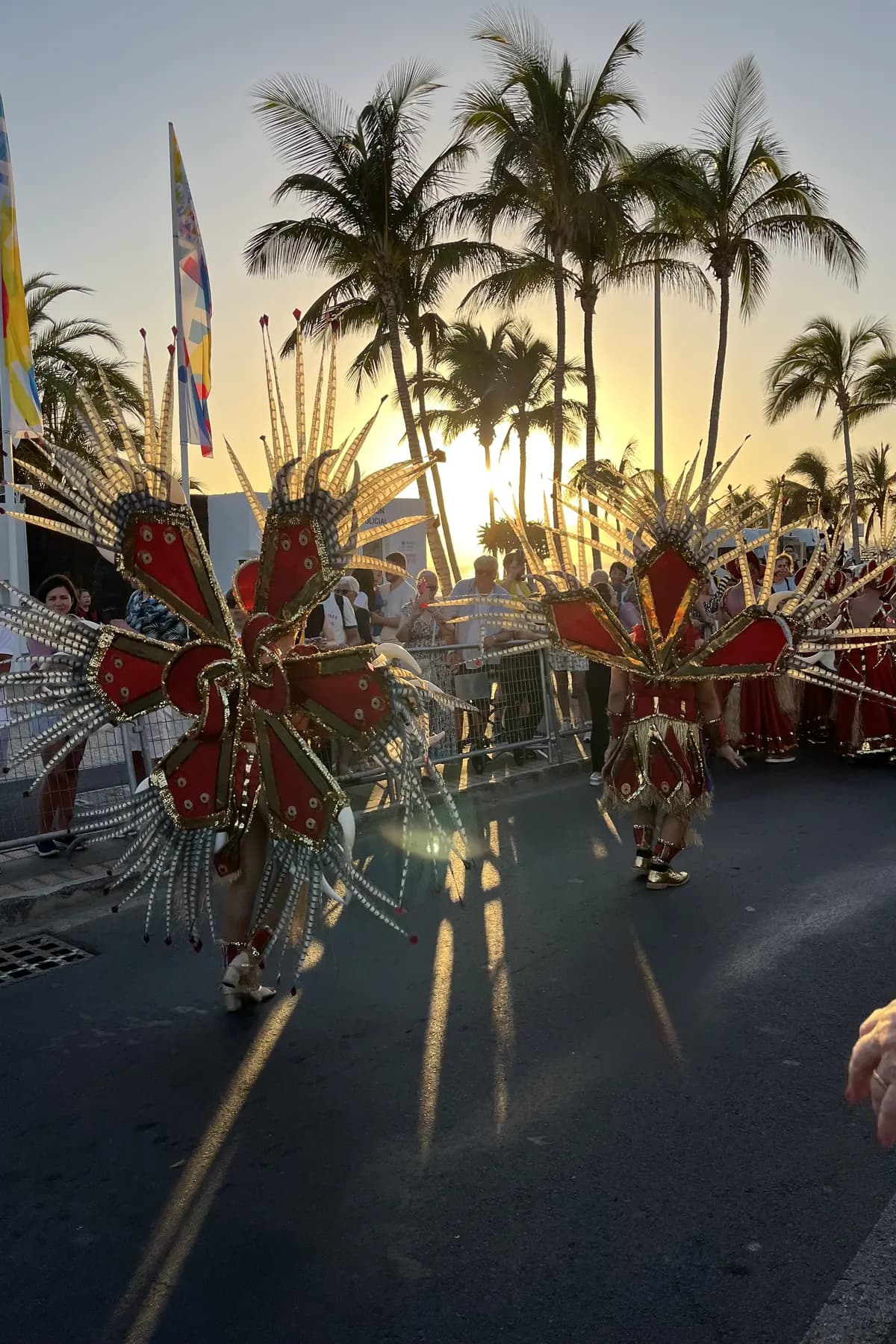
In Lanzarote something is always about to begin. February-March: carnivals seasoned with sandpaper and sea salt — Los Buches (Arrecife's traditional carnival group), with their masks and inflated fish bladders, are pure seafaring tradition. May: the Ironman takes over the island. June: the bonfires of San Juan in Haría. July: the fiestas del Carmen fill the harbours with decorated boats — the seaborne procession on La Graciosa is one of the images of the year. August: San Ginés, Arrecife's great fiesta. September: the whole island walks to Mancha Blanca in the Romería de los Dolores (pilgrimage festival). October: Arrecife en Vivo — music on the docks. November: trail running in Haría; December: the international marathon. And whenever the sea commands, the Quemao Class. Check the dates: your holiday week is bound to fall inside something.
Island calendars have a logic of their own: here the fiestas don't interrupt life — they organise it. This is Lanzarote's year told through its fixtures.
The year starts in fancy dress. Between February and March, the carnivals move around the island municipality by municipality, with Arrecife and Puerto del Carmen at the head: murgas, comparsas, drag queens and a unique ethnographic jewel — Los Buches (Arrecife's traditional carnival group), the seafaring carnival troupe that parades in old costumes and masks, carrying inflated fish bladders (the "buches") with which they wallop, with regulated affection, anyone who crosses their path. It is the saltiest carnival in the Atlantic.
Spring brings the big sport: May's Ironman (card 36) turns the island into a stadium, with thousands of volunteers and whole villages on the verges. In June, the night of San Juan lights bonfires — those of Haría, among the palm trees, are the most photogenic — to bid farewell to spring with embers and wishes.
Summer is seafaring and patronal. In July, the fiestas of the Virgen del Carmen — patroness of fishermen — fill the harbours with processions on the water: the one on La Graciosa, with the Virgin sailing escorted by dozens of decorated boats and the wall of Famara in the background, is one of the images of the year; Puerto del Carmen and Playa Blanca hold their own. In August, San Ginés rules: Arrecife devotes two weeks to its patron saint — concerts, street parties, sport, a fair and that very Canarian blend of solemn Mass and dance orchestra into the small hours.
September is the sacred month. On the 15th, the Romería de los Dolores (pilgrimage festival; cards 27 and 45) brings the whole island together, walking to Mancha Blanca in traditional dress, with carts, timples (small Canarian guitars) and baskets — the great feast of the Lanzarote heart, followed by its craft fair. October brings the most modern date in the calendar: Arrecife en Vivo, a music festival that turns the capital's docks and harbour corners into a chain of stages — free concerts, marching bands leading the crowd from stage to stage and the whole city dancing from port to port. It has won awards as best singular-format festival: the formula — music + dock + sunset — is unbeatable.
The close of the year belongs to the legs: the Haría Extreme in November — trail running along the northern paths, with starts and finishes among palm trees — and the Lanzarote International Marathon in December, with thousands of European runners fleeing winter along the Puerto del Carmen promenade. And floating above the whole calendar, the fixture with no date: the Quemao Class (card 39), called only when the ocean decides to send the perfect wave to La Santa — the island's most capricious and authentic event.
A local friend's tip: look at the fiesta calendar before you book. Any ordinary week of holiday here can come with a free gift: a procession on the sea, a festival on a dock or a bonfire beneath the stars.