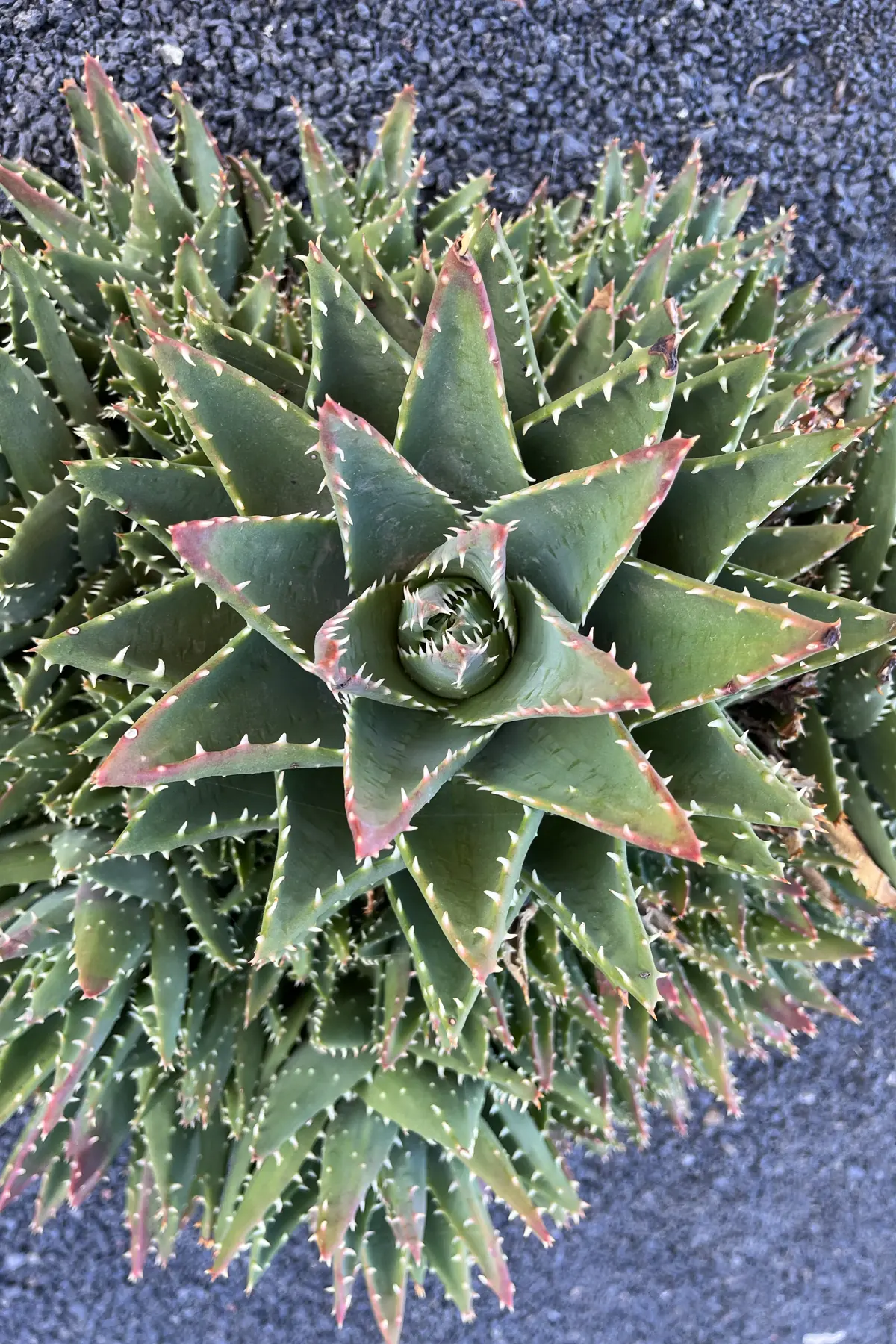
Those plantations of fleshy green rosettes you see across the north and centre of the island are aloe vera — and the Canarian variety has a worldwide reputation. The reason is the climate: intense sun, drought and volcanic soil force the plant to concentrate in its leaves the gel rich in compounds that has made it famous — the same gel that soothes sun-punished skin (a useful fact at this latitude). The islanders have used it for ever: leaf cut, fresh gel, straight onto the burn. Today there are farms you can visit where they show you the plant, the cutting and the product — and one golden rule for buying well: check the percentage of pure aloe and the local origin on the label. A useful souvenir, green and of this land: few souvenirs genuinely heal.
Of all the plants that grow in Lanzarote, none has built such a visible industry as aloe vera. Its plantations — rows of green, spiny-tipped rosettes lined up on picón (volcanic cinder) — are part of the modern agricultural landscape of the north and centre of the island, and its products fill entire shop windows. Behind the phenomenon lie serious botany, a curious history and a couple of buying tips worth knowing.
Botany first. Aloe (Aloe barbadensis miller, the "true" aloe vera) is a succulent plant of probably Arabian-African origin that humanity has cultivated for millennia — the Egyptians, Greeks and Romans used it, and tradition has it that Cleopatra kept it in her vanity case. In the Canaries it found textbook conditions: an enormous amount of sun, little rain and volcanic mineral soils. And here is the key that local producers rightly repeat: water stress is its secret. An over-watered aloe fattens up with watery leaves; an aloe grown "the Lanzarote way", almost dry-farmed on volcanic ash, concentrates in its gel the polysaccharides (such as acemannan), vitamins and minerals that give it its properties. Less water, more substance: the same logic that makes the wines of La Geria great.
And what is it for? Science backs its star use most solidly: the gel soothes, moisturises and helps skin regeneration — mild sunburn, irritation, dryness. On an island with a high UV index most of the year (card 34), it is literally the local remedy for the most common visitor's mistake. The islanders have always used it in kilometre-zero form: cut a leaf, let the acíbar drain off (the yellow, bitter sap of the rind, best discarded), fillet it and the transparent crystal goes straight onto the skin. As for the rest of the catalogue — creams, shampoos, juices, a full cosmetics range — the dozens of specialist shops will do the talking.
Now for the local friend's advice, because success attracts chancers. To buy well: look for the percentage of pure aloe on the label (in a good gel, the higher the better; distrust ingredient lists where aloe appears at the end), look for certified Canarian origin, and buy at producing farms, pharmacies or reputable shops. The best experience is to go to the source: several aloe farms and centres on the island offer visits — many free — where you see the plantation, they explain the cutting and processing, and you try the product on your skin before deciding. You learn, you compare, and the money stays in local agriculture.
A souvenir that drinks the island's sun, fits in your suitcase and repairs the excesses of the beach: few holiday purchases have such a good defence. Lanzarote's pharmacy is green, grows on lava and needs no prescription.