Before it lived off suitcases, Lanzarote lived off ships setting sail fully laden. Its exporting history is a novel in chapters: orchilla — a lichen that dyed the robes of Europe purple —, barrilla for the soap factories, the cochineal that coloured half a continent, the salt that preserved the fleet's fish, and the onions and sweet potatoes that crossed the Atlantic to Cuba. Today the list is shorter but shinier: internationally awarded Malvasía Volcánica wines, aloe vera, flor de sal from Janubio, artisan cheeses. And the invisible export, which fits in no container: the Lanzarote model — how to care for a territory and live from it — studied all over the world.
If the docks of Arrecife could talk, they would tell the island's economic history in the form of cargoes. Each era shipped out its own — and the list is more surprising than it seems.
The old chapters are of dyes and ashes. Orchilla, a lichen that grows on the sea cliffs, was the first exportable treasure: from it was extracted a fabulously expensive purple dye that the Majos were already gathering and that the European powers fought over for centuries — there were even professional "orchilleros" abseiling down the cliffs. Then came barrilla: coastal plants which, burnt, produced soda ash for Europe's soap works and glassworks — in the early nineteenth century, the island lived through a genuine barrilla fever. It was followed by the most glamorous chapter, cochineal (card 30), the carmine insect that dressed nineteenth-century Europe in red and built the grand houses of Guatiza and Mala. And always, in the background, the salt of Janubio (card 28) — the strategic preservative of the Canarian-African fishing fleet — and the salted fish that fed generations.
The twentieth century exported — in addition — something more painful: people. Droughts and crises drove thousands of Lanzaroteños to Cuba, Venezuela, Uruguay; the ships carrying onions and sweet potatoes from the jable (sandy plain) to the Americas carried emigrants too, and the remittances and returns of "los indianos" are part of the island's DNA (card 50). The Lanzarote onion was, for decades, a staple of Cuban markets: few islands can say their vegetable garden crossed the Atlantic.
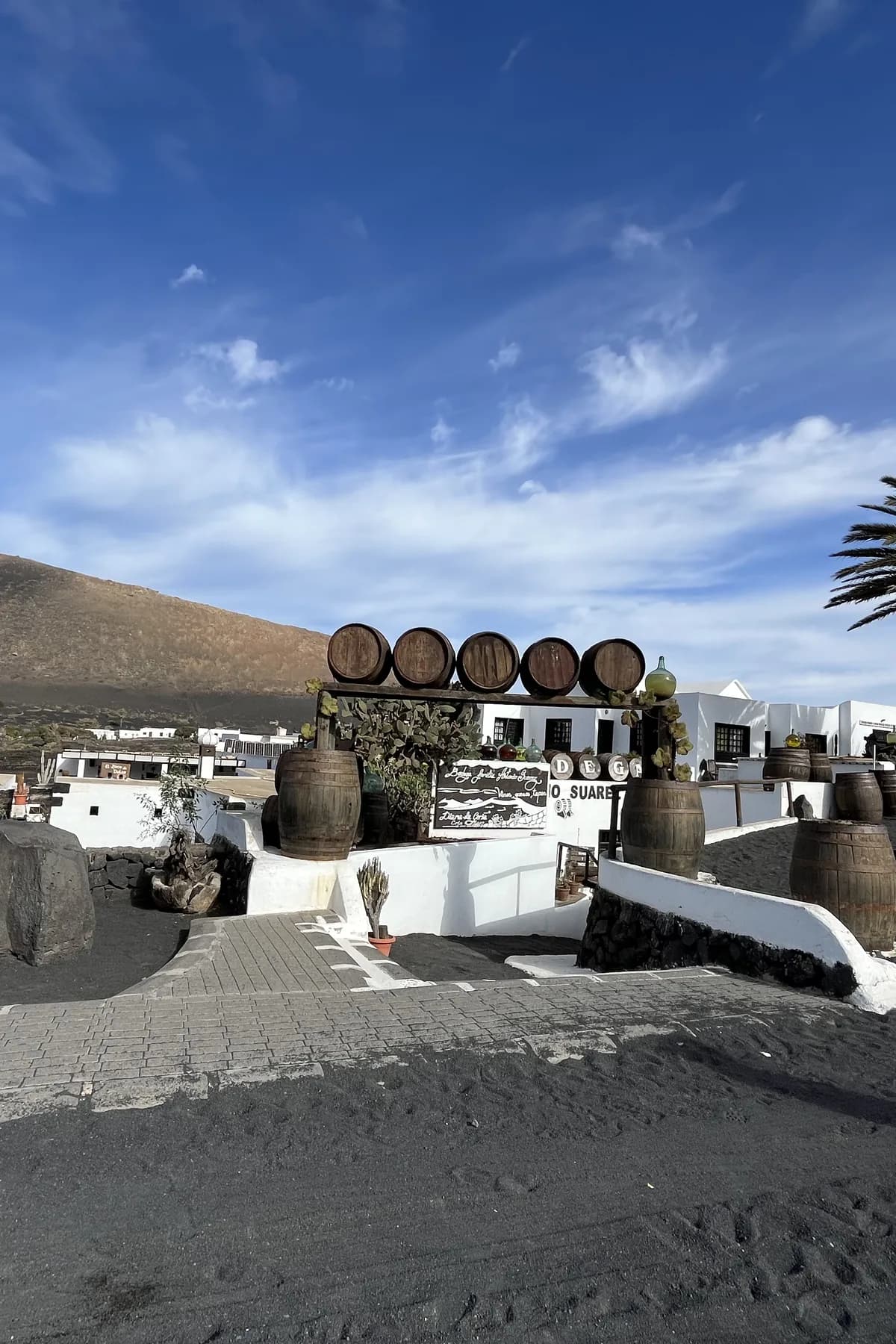
And today? Tourism dominates almost everything — it is, by far, the island's great "foreign product", even though it is consumed in situ — but the physical export catalogue has more quality than ever. The wines of the D.O. Lanzarote, with Malvasía Volcánica at the fore, win medals at international competitions and travel to restaurant lists in half the world — wine born in hollows of ash is, besides, an irresistible ambassador for the island's image. Aloe vera (card 58) leaves in the form of cosmetics with the Canarian seal. The sea salt and flor de sal of Janubio sit in the larders of Spanish haute cuisine. The artisan cheeses keep collecting prizes; gofio (toasted grain flour), potatoes and the produce of the jable supply the Canarian market; and the artisanal catch still goes out to the regional market.
There remains the export that weighs nothing: knowledge. The "Lanzarote model" — art + territory + limits to growth, the Manrique-Biosphere formula — is studied in universities and tourism forums all over the world; the island exports involuntary consultancy every time someone comes to understand how it's done. And desalination (card 31), where it was Europe's pioneer, made it a global technical reference.
From the purple of a lichen to the wine of a volcano: deep down, the island has always exported the same thing — ingenious ways of turning scarcity into value. It has been its flagship product for five hundred years.