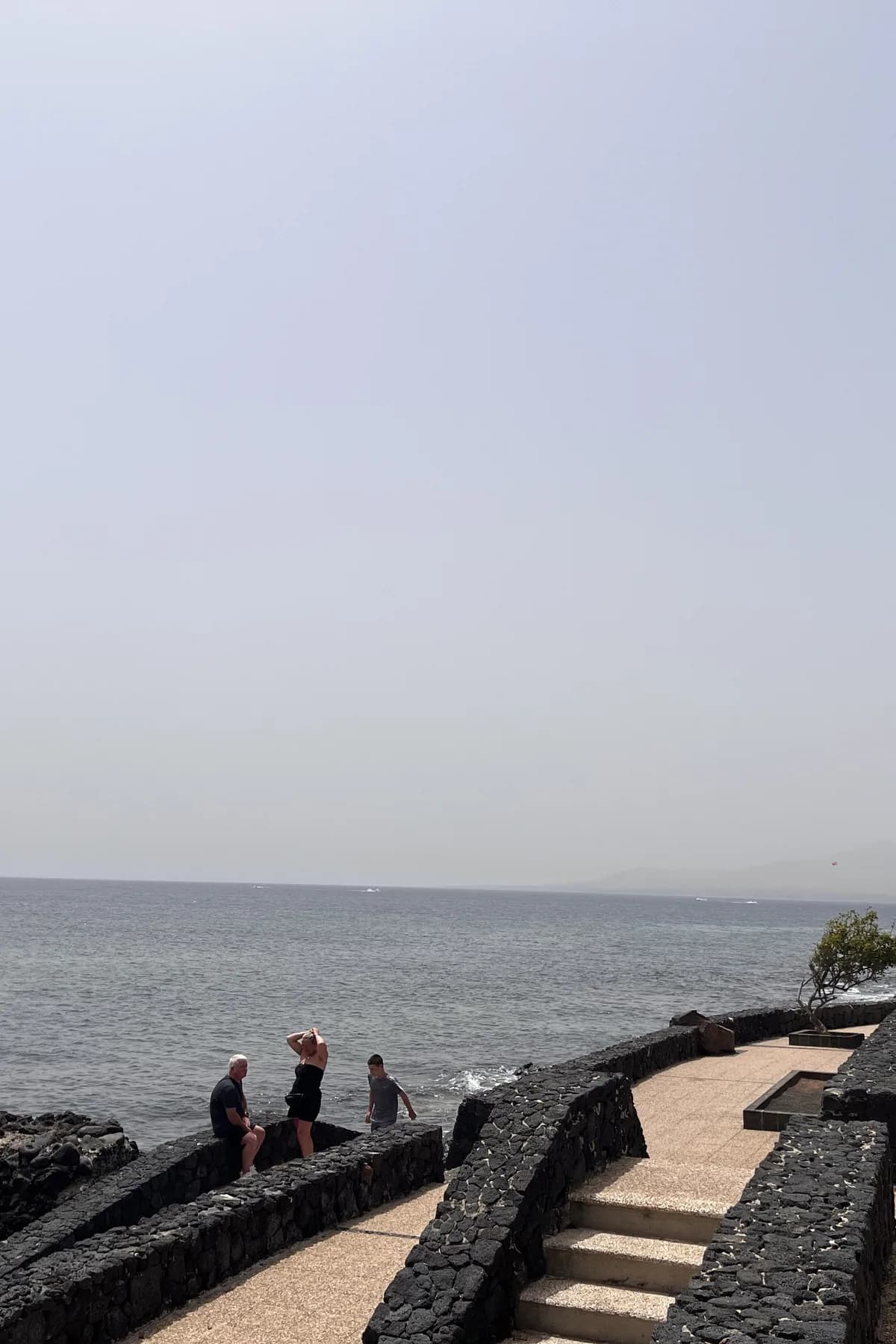
Before the ten kilometres of beaches and promenades, Puerto del Carmen was La Tiñosa: a handful of fishermen's houses around a boatyard. This is where island tourism docked — with the first hotels of the sixties — and this is where its double heart still beats: the Avenida de las Playas, with its endless energy, and the old quarter of the harbour, where the boats still go out and the fresh fish travels from quay to table. Among its beloved corners is the famous parrots' corner [CONFIRMAR VE: localización e historia exacta], where generations of visitors have posed with the parrots as a tropical keepsake of the trip. From the boatyard to sunset with an ice cream: Puerto del Carmen is the biography of the island's tourism in walkable form.
Every tourist empire has its village of origin, and Lanzarote's is called La Tiñosa. Until the mid-twentieth century, this was a little fishing village of barely a few dozen families: low whitewashed houses around a natural boatyard, open-decked boats that went out to the African fishing grounds, and a life governed by the sea, the salt and the saints of the calendar — with the Virgen del Carmen, patroness of seafarers, presiding over the July fiestas that today give their name to the whole coastal town.
The plot twist came in the sixties. European tourism was discovering the winter sun of the Canaries, and the family who owned the land beside the big beach made a bold bet: in 1966 the island's first great hotel opened next to the Fariones point, and with it came the first generation of regular visitors — British and German, above all, pioneers of a loyalty that lasts to this day (card 48). The little fishing village grew eastwards, beach by beach: Playa Grande, Los Pocillos, Matagorda… until it totalled some ten kilometres of golden shoreline joined by the Avenida de las Playas, the backbone of the island's first great resort. For decades, "going to Lanzarote" meant, for millions of Europeans, exactly this.
The remarkable thing is that the origin did not die beneath the growth. The old quarter — El Varadero, around the harbour — keeps the scale and the soul of the village: boats at their moorings, fresh-fish terraces where the tuna and the vieja arrive from the quay next door, whitewashed alleys and the most celebrated sunset in the south of the island, with Fuerteventura and Lobos silhouetted in the background. The mixture works: a hundred metres from the liveliest avenue on the island you can dine as if in a seafaring village, because it is a seafaring village.
And among the corners with a memory of their own is the one that gives this card its surname: the parrots' corner [CONFIRMAR VE: ubicación exacta — ¿zona del puerto viejo/Varadero? — y la historia de los papagayos y su fotógrafo/propietario], the spot where generations of visitors have had their photograph taken with the colourful parrots as a living souvenir of the trip — one of those minor traditions that end up as the most repeated photo in the family albums of half of Europe. Every veteran tourist town has a corner like this: this one is Puerto del Carmen's, and asking the older neighbours of the harbour for its story is a conversation worth an entire afternoon. [Nota interna: cerrar la historia con la memoria local de VE antes de traducir.]
Puerto del Carmen today is the complete biography of Lanzarote tourism in walkable format: you enter through the twentieth-century harbour, stroll along the avenue of the boom, and finish on the family beaches of the east — and every stretch holds an era. Walk it with that eye and you will see it for what it is: the place where an island of fishermen and salt workers learnt its new trade without losing its soul.