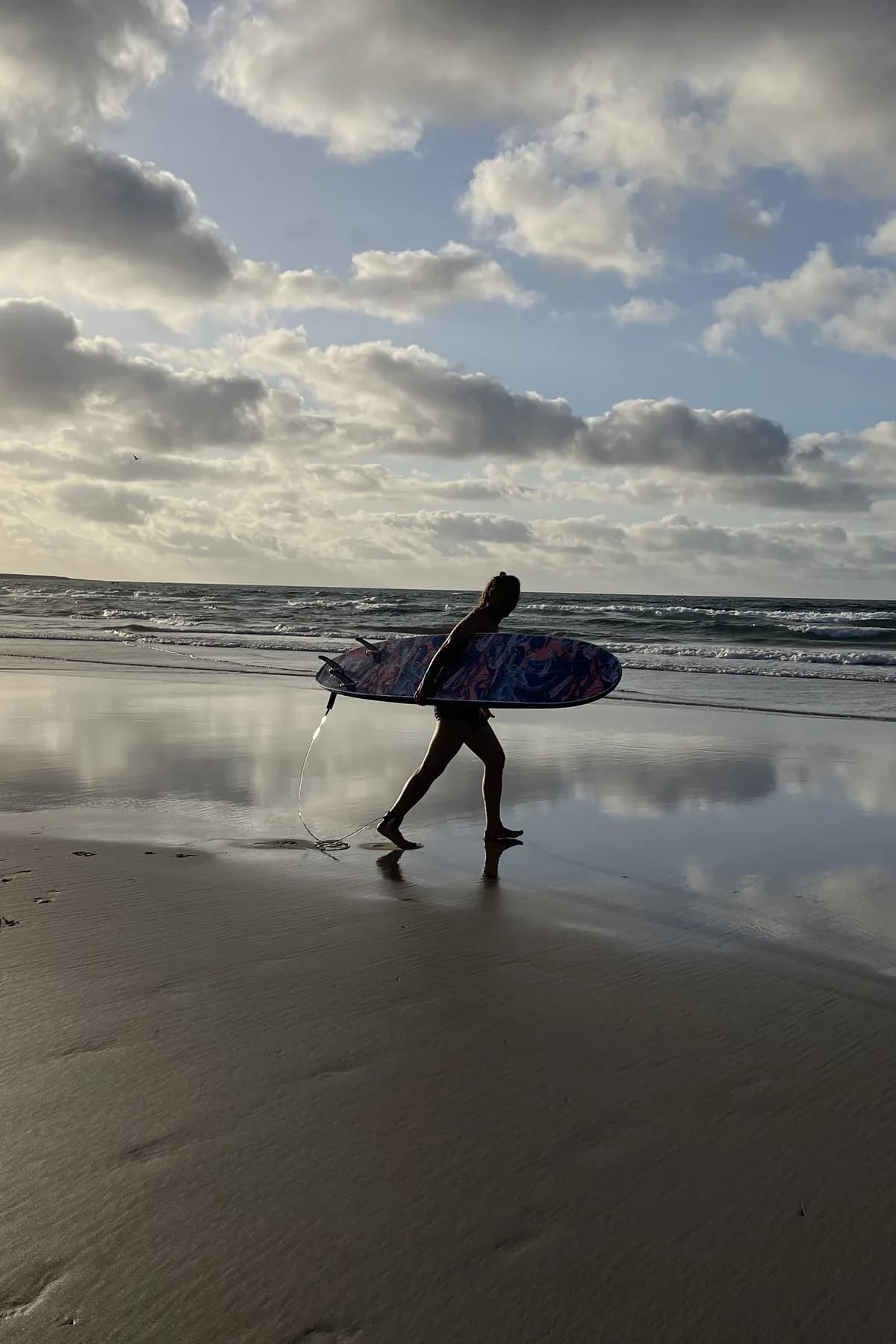
In the fishing village of La Santa breaks a wave that professional surfers pronounce with respect: El Quemao, a short, hollow, violent left over a lava seabed, nicknamed "the Canarian Pipeline". When it fires, the Quemao Class is held and big-wave chargers come from half the world. Twenty minutes away, the other side of the coin: the bay of Famara, five kilometres of sand beneath the cliff, the perfect surf school where half of Europe learnt to stand up. Lanzarote has been surfing since the seventies and it shows: there are schools, boards for hire and waves for every level — almost all year round.
Surfing arrived in Lanzarote in the early seventies, with the first travellers who discovered that this island receives, clean and orderly, all the swell the North Atlantic manufactures in winter. Half a century later, the north-west coast is one of the most respected wave zones in Europe — surfers call it, half in jest, half in earnest, "the European Hawaii" — and surf culture is part of the scenery: vans loaded with boards, wetsuits drying on railings, and a local community that lives with one eye on the surf forecast.
The jewel in the crown breaks in front of the village of La Santa. El Quemao is a left (the wave breaks to the left as seen from the sea), short, hollow and punchy, throwing up perfect tubes over a lava seabed just metres from the shore. It's an experts' wave, compared by the professionals to the reef breaks of the Pacific — hence the nickname of the Canarian Pipeline. When winter brings the right swell, the Quemao Class is activated: an invitation-only championship gathering tube specialists from several countries; it's called with only a few days' notice, when the sea decides, and watching the invitees slot into those cylinders of water from the village promenade is a major spectacle — and a free one.
A quarter of an hour away, the bay of Famara is the other half of the story. Five kilometres of golden sand beneath the cliff, with sandbanks that break soft and long: the perfect classroom. Most of the island's surf schools operate here, and every morning dozens of beginners from all over Europe celebrate their first wave ridden standing up. Famara also has peaks for intermediates and, at the ends of the bay, serious waves for those who already know what they're doing. The rest of the map is completed by spots such as San Juan, Caleta de Caballo or the rights and lefts of the north — many over volcanic rock, which is to say: for advanced surfers with local knowledge.
Bodyboarding deserves a paragraph of its own: Lanzarote is a historic powerhouse of the discipline, with lava-bottom breaks made to measure and local champions who have carried the island's name around the world circuit.
House rules to keep everything flowing: in the water, priority rules (whoever is closest to the peak goes first), the locals know every rock — watch before you paddle out and ask at the schools — and a short wetsuit is enough almost all year. Never surfed? Famara + a two-hour lesson = the cheapest smile of your holiday. Been surfing for years? You already know why you came.