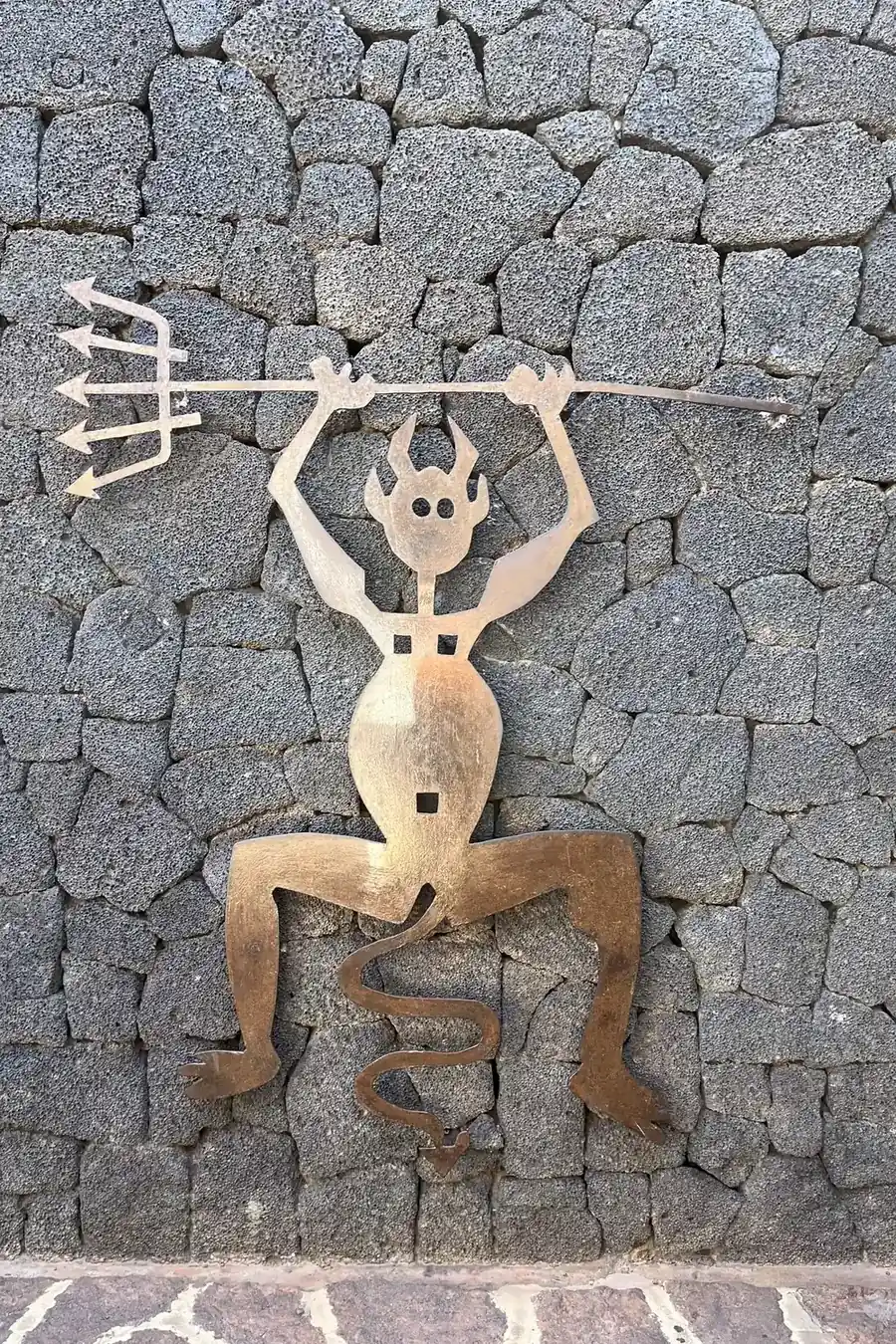
Every great eruption leaves lava — and legends. From the six years of fire of the 18th century, Lanzarote kept two that are still alive. One is the devil who danced among the flames: centuries later, César Manrique drew him with his trident and turned him into the official symbol of Timanfaya — the little devil you now wear on your T-shirt. The other is that of the Virgen de los Dolores: they say that when the lava was advancing on Mancha Blanca, the villagers went out to meet it with the image of the Virgin, and the river of fire stopped. Every 15 September, half the island walks in pilgrimage to her chapel to keep the promise. Myth or miracle, it is Lanzarote's best-loved fiesta.
Imagine being an 18th-century farmer. The word "magma" does not exist, nobody has told you about tectonic plates, and one night the earth splits open two leagues from your house: columns of fire, underground thunder, a red glow that doesn't go out for years. What explanation is there? For many islanders of the day, it could only be the devil's work. The stories ran from mouth to mouth: figures dancing among the flames, the evil one peering out of the volcano's vents. Fear needed a face, and it gave it one.
The extraordinary thing is what happened to that face two centuries later. When the Timanfaya National Park was created, César Manrique — who turned everything he touched into art — designed its emblem: a mischievous little iron devil with horns, tail and trident, more endearing than fearsome. It was a move of cultural judo: he took the symbol of his ancestors' terror and transformed it into the island's best-loved mascot. Today the "devil of Timanfaya" greets visitors at the park entrance, spins as a weathervane above the restaurant El Diablo and travels the world on T-shirts and fridge magnets. Few islands have made peace with their fear with such style.
The second legend has a chapel, a date and a crowd. They tell that when the lava flows were advancing on the village of Mancha Blanca, the villagers — their earthly options exhausted — brought out the image of the Virgen de los Dolores and marched towards the lava front, standing up to it with a prayer. The river of fire, tradition says, stopped right there. In return, the village promised to build her a chapel, a promise that took its time to be kept — the legend adds that the Virgin herself saw to reminding them with signs — and which is today the sanctuary of the Ermita de los Dolores, in Tinajo. The Virgen de los Volcanes has been the island's spiritual patron ever since.
And here comes the lovely part: the promise is still being paid. Every 15 September, the whole island converges in pilgrimage on Mancha Blanca — on foot from every village, many in traditional dress, with decorated carts, timples (small Canarian guitars) and baskets of food. The Romería de los Dolores is Lanzarote's great fiesta: part procession, part popular marathon, part street party. If your trip coincides, join the walk from any village in the north: walking at night among hundreds of people towards a lamplit chapel, with the black outline of the volcanoes beyond, is to understand in one stroke how this island turned fear into fiesta.
Geology for the brain, legends for the soul. Nobody here makes you choose.