The greatest nature reserve of Lanzarote is the one you cannot see from the beach. Beneath the surface, the island's volcanic geology continues: lava reefs, arches, caves and walls of black rock, swept by clean Atlantic water so clear that visibility often reaches thirty metres. For divers and snorkellers, it is one of the finest playgrounds in Europe.
The cast of characters is unforgettable. Shoals of bright ornate wrasse and damselfish hover over the reefs. Canary parrotfish — the beloved vieja — graze the rocks in flashes of grey and red. Groupers watch from their caves, octopuses change costume mid-swim, and garden eels sway like grass from the sandy bottom. Rays glide past like slow birds: eagle rays, common stingrays and, with luck, the graceful butterfly ray. Lanzarote's waters are also one of the last strongholds of the angel shark, a rare, gentle, bottom-dwelling shark that has become an emblem of marine conservation in the Canaries — seeing one resting on the sand is a bucket-list moment for divers from all over the world.
To the north, around La Graciosa and the islets of the Chinijo Archipelago, lies one of the largest marine reserves in Europe, a sanctuary where seabirds, fish and marine mammals thrive. Out in the open water between the islands, dolphins are frequent companions of boat trips, and the Canary current occasionally brings turtles drifting past like small, unhurried submarines.
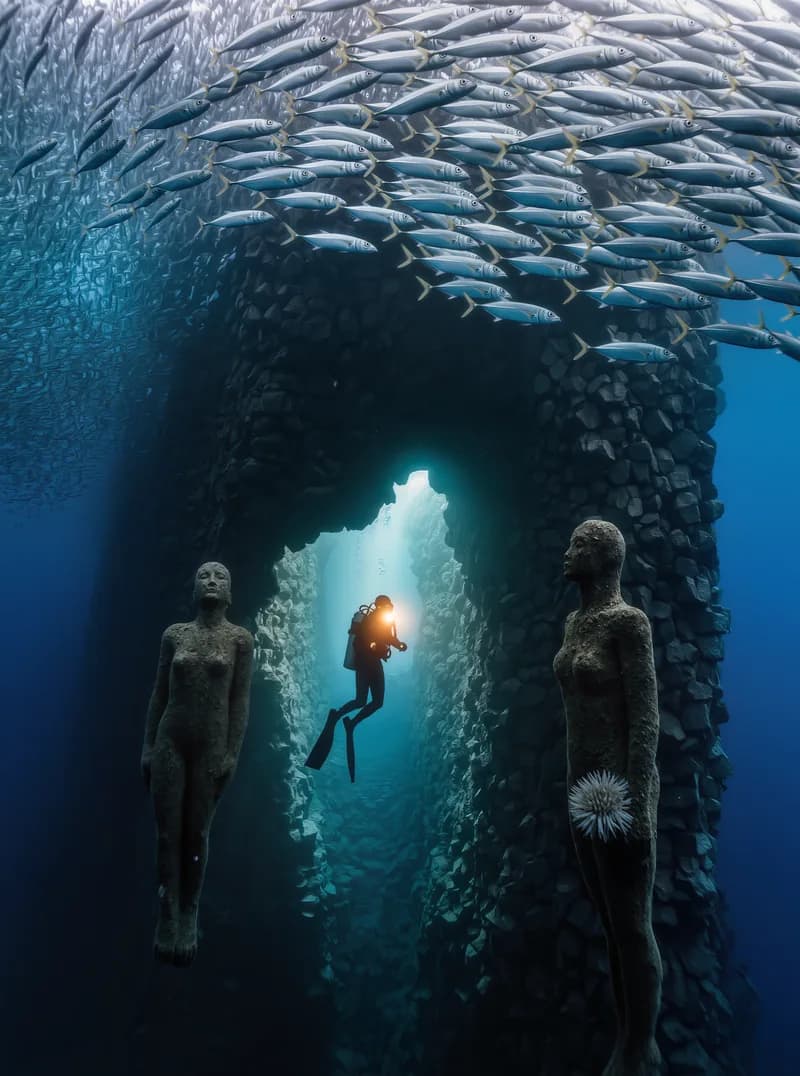
And then there is the museum. Off the coast of Playa Blanca, at around twelve metres of depth, the Museo Atlántico was created in 2016 as Europe's first underwater sculpture museum: hundreds of life-size human figures slowly transforming into artificial reef, visited as easily by rays and barracudas as by divers.
Whether you explore it with a scuba tank, a snorkel or a glass-bottomed boat, the message of Lanzarote's underwater world is the same: the island does not end at the shoreline. Its most secret landscapes are just getting started.